Sewer line problems often appear suddenly, but the damage usually develops slowly over time. Cracks, corrosion, root intrusion, and ground movement can gradually weaken underground pipes until repairs become unavoidable. When the damage reaches a certain point, cleaning or small repairs may no longer solve the issue. At that stage, sewer line replacement becomes the most reliable solution.
Before beginning any major plumbing repair, property owners often want to understand what affects the final price. The sewer line replacement cost can vary significantly depending on the condition of the pipe, the location of the line, and the repair method used. Knowing the factors involved helps homeowners and property managers plan ahead and make informed decisions about their plumbing system.
Understanding what goes into sewer line replacement also helps prevent unexpected expenses and delays during the repair process.
Sewer lines are built to last for decades, but they are constantly exposed to underground conditions that slowly weaken pipe materials. Soil pressure, shifting ground, water flow, and environmental factors all contribute to pipe deterioration.
Older homes often have sewer lines made from clay, cast iron, or other materials that eventually degrade. These materials may crack, collapse, or separate at their joints as they age. Once a pipe loses structural integrity, wastewater can leak into surrounding soil or cause recurring blockages inside the system.
In these situations, sewer line replacement may be the most effective way to restore reliable drainage and prevent ongoing plumbing issues. Although repairs may temporarily restore flow, a severely damaged pipe often requires a full replacement to eliminate recurring problems.
Understanding the sewer line replacement cost early helps property owners prepare for the scope of the project and the potential investment required.
Several factors determine the total cost of replacing a sewer line. Each property has unique conditions that affect the complexity of the work and the equipment required.
These factors explain why the sewer line replacement cost may vary from one property to another. A professional inspection helps determine the exact conditions affecting the project.
Not all sewer problems require complete replacement. In some situations, minor repairs or trenchless restoration methods may solve the issue. However, certain types of pipe damage make replacement the safer long-term solution.
Severe corrosion, collapsed sections, or extensive root intrusion often indicate that the pipe has reached the end of its service life. Continuing to repair the same line repeatedly can lead to higher long-term expenses.
When professionals evaluate the system, they often use video inspection equipment to view the interior of the pipe. This allows them to determine whether repairs are still possible or if sewer line replacement will provide a more reliable solution.
Identifying the right approach early helps property owners better understand the potential sewer line replacement cost and avoid unnecessary repeat repairs.
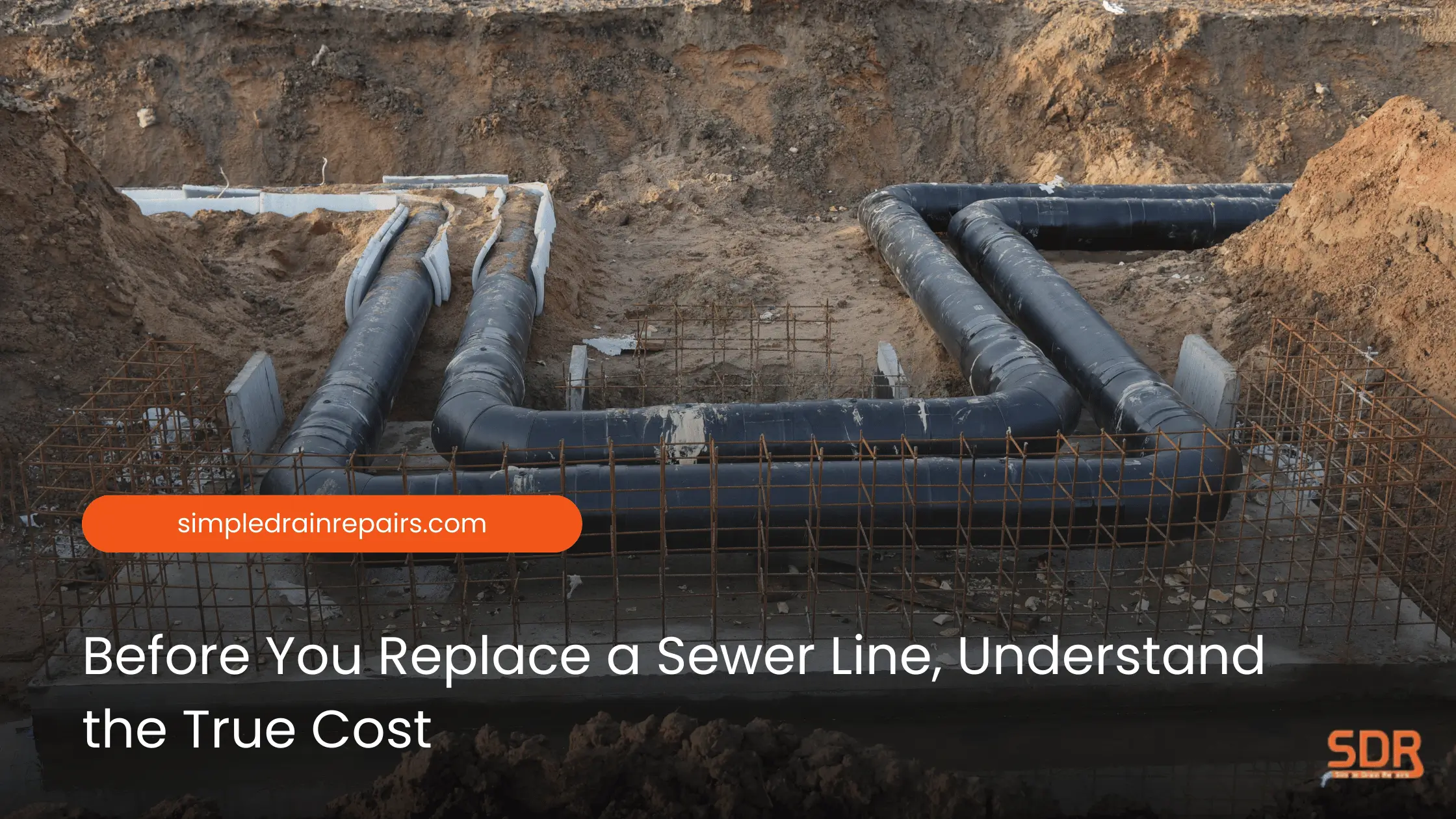
Modern plumbing technology has introduced new repair techniques that may influence the overall cost and scope of the project. Traditional sewer line replacement typically involves excavation along the length of the pipe to remove and replace damaged sections.
Trenchless methods, on the other hand, allow technicians to repair or replace pipes with minimal digging. These techniques can reduce disruption to landscaping, driveways, and surrounding structures.
Common trenchless options include pipe lining and pipe bursting. Each method has its own advantages depending on the pipe condition and property layout.
While trenchless solutions may reduce surface damage, the final sewer line replacement cost still depends on several factors, including pipe length, access points, and the extent of existing damage.
In addition to pipe condition and location, several site conditions can influence the complexity of a sewer replacement project.
These considerations often determine how long the project will take and what resources are required to complete the work safely.
When professionals evaluate the property beforehand, they can identify these factors and provide a clearer estimate of the expected sewer line replacement cost.
One of the most effective ways to manage plumbing expenses is early detection. Small cracks or blockages can often be repaired before they cause extensive pipe failure.
Routine inspections and preventative maintenance allow technicians to identify developing problems before they require full replacement. This proactive approach helps property owners avoid emergency repairs and unexpected damage.
Ignoring early warning signs such as slow drains, recurring clogs, or sewage odors can allow pipe damage to worsen. When a pipe eventually collapses, repairs may become more extensive and costly.
Addressing sewer problems early can help control the overall sewer line replacement cost and prevent additional property damage.
While sewer line issues can be stressful, understanding the factors that influence repair costs allows property owners to approach the situation with confidence. Sewer systems are an essential part of every property, and maintaining them properly helps prevent long-term structural and sanitation problems.
A professional inspection provides the most accurate assessment of the pipe condition and the best repair options available. With the right information, homeowners and property managers can make informed decisions about how to restore their drainage system.
If you suspect a problem with your sewer line or want to better understand the condition of your underground plumbing system, our team at Simple Drain Repairs can help. Our experienced technicians provide professional inspections, diagnostics, and repair solutions to keep sewer and drainage systems operating safely and efficiently.